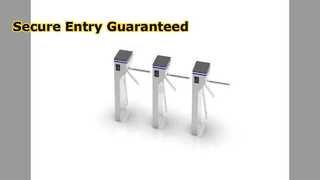
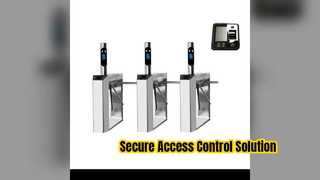
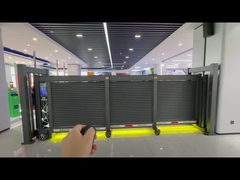
Brief: See the journey from feature description to real application in this concise overview. Watch as we demonstrate the SUS304 Tripod Turnstile Gate's smooth operation in pedestrian control scenarios. You'll learn how this electronic access control solution efficiently manages high-traffic flow with its advanced technology and durable construction.
Related Product Features:
Constructed from high-quality SUS304 stainless steel for exceptional corrosion resistance and durability.
Offers high passing speed of up to 40 persons per minute when integrated with IC card systems.
Features reliable communication interfaces including RS485 and TTL232 for seamless system integration.
Designed with maximum passage width of ≤550mm for comfortable and controlled pedestrian access.
Operates effectively in environments with relative humidity less than 99%, non-condensing.
Supports multiple identification methods including IC cards, RFID cards, QR codes, and biometric devices.
Compact tripod turnstile device design suitable for various indoor and outdoor applications.
Energy-efficient design with power voltage requirement of AC220V±10V, 50Hz.
FAQs:
What materials are used in the construction of this tripod turnstile gate?
The tripod turnstile gate is constructed from high-quality SUS304 stainless steel, providing exceptional resistance to corrosion, wear, and environmental factors for long-term durability.
How many people can pass through the turnstile per minute?
The turnstile gate can handle up to 40 persons per minute when integrated with an IC card system, making it ideal for high-traffic locations requiring efficient pedestrian flow management.
What communication interfaces does the turnstile gate support?
The turnstile gate is equipped with RS485 and TTL232 communication interfaces, enabling reliable data exchange with central control systems for real-time monitoring and user authentication.
What are the environmental operating conditions for this turnstile gate?
The turnstile gate operates effectively in temperatures ranging from -15°C to 75°C and in environments with relative humidity less than 99%, non-condensing, ensuring stable performance in various conditions.